Perfume Brand Houses
The stories, heritage, and signature styles behind 93 of the world's most influential fragrance houses — all with South African availability info.
Luxury Heritage
Legendary European houses with decades of perfumery mastery
Acqua di Parma
Founded by Baron Carlo Magnani
Founded in Parma, Italy by Baron Carlo Magnani, Acqua di Parma launched its debut fragrance Colonia in 1916 — a timeless blend of citrus and florals inspired by the Italian dolce vita. One of the world's oldest continuously produced colognes, it became iconic among style icons including Cary Grant and Audrey Hepburn. The brand embodies Italian craftsmanship and bella figura. Acquired by LVMH in 2001, it has since expanded into grooming, leather goods, and home collections while retaining its artisanal Parma roots.
Azzaro
Founded by Loris Azzaro
Founded by Loris Azzaro (born in Tunis, 1933), the Paris fashion house launched its first fragrance in 1967. Chrome (1996) became one of the best-selling men's aquatics of the 1990s and remains a modern classic. Wanted (2016) revitalised the brand for a new generation. The house is known for glamorous, sensual style rooted in Mediterranean joie de vivre. Azzaro fragrances are distributed globally by L'Oréal's luxury division.
Burberry
Founded by Thomas Burberry
Founded in 1856 in Basingstoke, England by 21-year-old Thomas Burberry, the house is famous for its gabardine trench coat and iconic check pattern. The first Burberry fragrance was launched in 1981. Burberry Brit (2001) was the breakthrough for a younger audience. In 2017, Burberry transferred its fragrance licence to Coty, which now develops and distributes all Burberry beauty and fragrance lines. The brand remains a global luxury powerhouse, traded on the London Stock Exchange.
Bvlgari
Founded by Sotirio Bulgari
Italian jeweller Sotirio Bulgari founded the house in Rome in 1884. Bvlgari entered perfumery in 1992 with the revolutionary Eau Parfumée au Thé Vert — one of the first fragrances built around green tea, created by perfumer Jean-Claude Ellena. Omnia (2003) expanded into oriental territory. The brand bridges fine jewellery and fragrance luxury. Acquired by LVMH in 2011 for €4.3 billion, Bvlgari remains headquartered in Rome.
Calvin Klein
Founded by Calvin Klein & Barry Schwartz
Calvin Klein and Barry Schwartz founded the fashion house in New York in 1968. Obsession (1985) was a revolutionary oriental fragrance with provocative advertising. CK One (1994), created by perfumers Alberto Morillas & Harry Fremont, was the world's first major unisex fragrance — a cultural watershed that changed how the industry marketed scent. Eternity (1988) became another icon. The fragrance business is licensed to Coty; PVH Corp owns the Calvin Klein fashion brand.
Carolina Herrera
Founded by Carolina Herrera
Venezuelan-born designer Carolina Herrera founded her New York fashion house in 1981 and launched her first fragrance in 1988. 212 (1997) captured the energy of Manhattan's social elite. Good Girl (2016), with its stiletto bottle split between light and dark, became one of the most successful fragrance launches of the decade. The house is owned by Puig, a Spanish beauty and fashion group, which distributes the fragrances globally.
Chanel
Founded by Gabrielle "Coco" Chanel
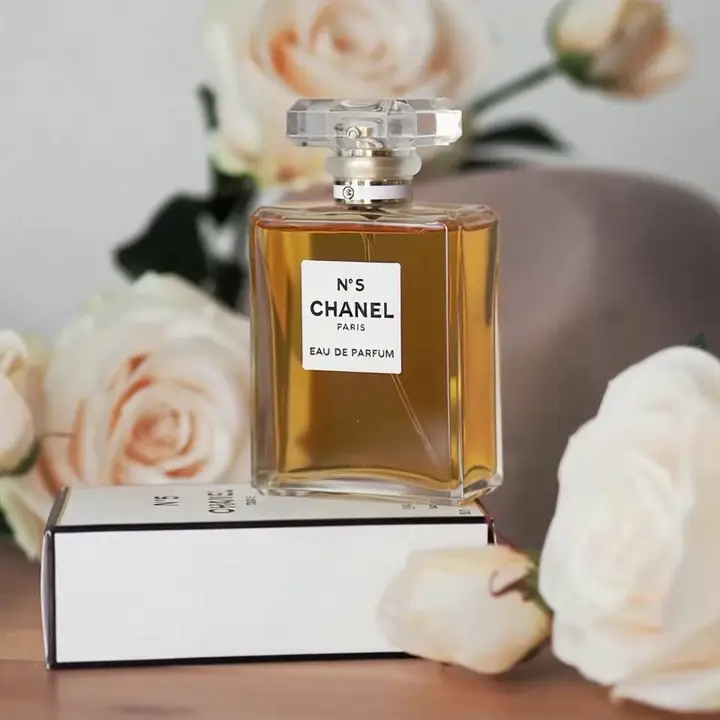
Chanel is the French fashion house whose 1921 fragrance launch, Chanel No. 5, became the most famous perfume in modern history. Founded by Gabrielle Bonheur Chanel — known as Coco — the maison built its fragrance reputation on a single revolutionary decision: hire a perfumer to create something that did not smell like a flower. The result, an aldehyde-rich floral composition, broke every convention of early 20th-century perfumery and established Chanel as the brand against which all luxury fragrance is measured.
Chloé
Founded by Gaby Aghion
Egyptian-born Gaby Aghion founded Chloé in Paris in 1952, pioneering prêt-à-porter luxury. The house's first fragrance was created in 1975 under Karl Lagerfeld. The breakthrough modern fragrance Chloé EDP (2008) — a clean, feminine rose-peony — revived the brand's fragrance identity and became a bestseller. Nomade (2018) added a nomadic, free-spirited character. Owned by Compagnie Financière Richemont (Richemont Group) since 1985.
Creed
Founded by James Henry Creed (claimed)
Creed is the French fragrance house whose 2010 launch of Aventus rewrote the modern masculine niche category. The brand markets itself as a 260-year-old British perfumery founded in 1760 by James Henry Creed in London, though independent historians have struggled to verify operations prior to the mid-20th century. What is verifiable: the modern Creed business was rebuilt by Olivier Creed in the late 20th century, his son Erwin Creed runs perfumery direction today, and the Aventus launch turned the brand from quiet niche success into the most-cloned, most-counterfeited masculine fragrance in the world.
Dior
Founded by Christian Dior
Dior is the French luxury house whose 1947 launch of the New Look couture collection — and the simultaneous launch of Miss Dior — redefined post-war femininity and built one of the most commercially successful fragrance empires in modern history. Today the brand spans the mass-market dominance of Sauvage (one bottle sold every three seconds globally) and the heritage prestige of Miss Dior, J'adore, Dior Homme, and Poison. The Dior Privée line — the niche-luxury offshoot launched in 2004 — sits alongside Tom Ford Private Blend as one of the most successful luxury-niche extensions in modern fragrance retail.
Dolce & Gabbana
Founded by Domenico Dolce & Stefano Gabbana
Domenico Dolce and Stefano Gabbana founded their Milan fashion house in 1985. Light Blue (2001), a sheer Mediterranean aquatic created by perfumer Olivier Cresp, became one of the world's best-selling women's fragrances and later launched a men's version. The One (2006) added an oriental warmth. The brand's fragrances are produced and distributed under licence by Shiseido's beauty division.
Elizabeth Arden
Founded by Florence Nightingale Graham (Elizabeth Arden)
Canadian-born Florence Nightingale Graham opened her first salon on Fifth Avenue, New York in 1910, adopting the name Elizabeth Arden. She pioneered the concept of coordinated beauty products. Red Door (1989), named after her famous red salon doors, became a classic floral aldehyde. 5th Avenue (1996) captured the glamour of New York. The brand was acquired by Revlon in 2016 and is now part of Elizabeth Arden Inc. under Revlon's portfolio.
Estée Lauder
Founded by Estée Lauder & Joseph Lauder
Estée Lauder and her husband Joseph founded the company in New York in 1946, beginning with four skincare products. Youth Dew (1953) was a pivotal innovation — a bath oil that doubled as a perfume, and one of the first fragrances women bought for themselves rather than receiving as gifts. Beautiful (1985) became one of the best-selling floral fragrances of all time. Today, Estée Lauder Companies is a publicly traded global beauty conglomerate owning over 25 brands.
Giorgio Armani
Founded by Giorgio Armani
Founded in 1975, Giorgio Armani launched fragrances in 1982 through a licensing agreement now held by L'Oréal. Acqua di Giò (1996) became one of the bestselling men's fragrances of all time — at its peak, one bottle sold every 5 seconds worldwide.
Givenchy
Founded by Hubert de Givenchy
Founded in 1952, Givenchy launched its fragrance division in 1957 with L'Interdit — a scent created exclusively for Audrey Hepburn. The house's Gentleman line (1974) pioneered the modern masculine fragrance category. Today, LVMH-owned Givenchy powers its perfume business through the relaunched L'Interdit (2018) and Irresistible lines.
Gucci
Founded by Guccio Gucci
Guccio Gucci founded the Florence leather goods house in 1921. Gucci entered perfumery in the 1970s and launched numerous fragrances over the decades. Flora (2009) was inspired by the vintage Flora silk scarf commissioned for Princess Grace of Monaco in 1966. Bloom (2017), created by Alberto Morillas for the 'Aria' era, celebrates individuality through a soliflore white floral. Gucci is owned by Kering (formerly PPR) and uses L'Oréal for fragrance development.
Guerlain
Founded by Pierre-François Pascal Guerlain
Guerlain is the French perfume house with the longest unbroken family lineage in modern perfumery — founded in 1828 by Pierre-François Pascal Guerlain and operated by five generations of the Guerlain family before passing into LVMH ownership in 1994. The house's catalogue includes some of the most influential fragrances ever composed: Jicky (1889) — the first fragrance to use synthetic vanillin; Shalimar (1925) — the foundational oriental; Mitsouko (1919) — the canonical chypre. Guerlain is to fragrance what Stradivarius is to violin-making: the reference point against which all subsequent work is measured.
Hermès
Founded by Thierry Hermès (house) / Jean-Claude Ellena (fragrances)
Hermès is the French luxury house that began as a saddlery in 1837 and quietly built one of the most respected fragrance arms in modern perfumery — a brand whose creative direction sits at the opposite end of the spectrum from celebrity-led mass marketing. Hermès fragrance is defined by the work of two long-serving in-house perfumers — Jean-Claude Ellena (2004-2016) and Christine Nagel (2014-present) — and built on a philosophy of restraint, refinement, and material quality. The brand's Hermessence collection, launched in 2004, helped redefine the niche-luxury category alongside Tom Ford Private Blend and Dior Privée.
Hugo Boss
Founded by Hugo Ferdinand Boss
Hugo Ferdinand Boss founded his clothing factory in Metzingen, Germany in 1924. Initially producing work and military uniforms, the brand pivoted to luxury menswear in the 1970s. BOSS Bottled (1998) — a woody-spicy-fruity accord created by perfumer Annick Ménardo — became one of the world's best-selling men's fragrances and remains the No.1 in the BOSS portfolio. The fragrance licence is held by Coty. BOSS Hugo Boss is publicly traded on the Frankfurt Stock Exchange.
Issey Miyake
Founded by Issey Miyake
Issey Miyake founded his fashion brand in Tokyo in 1970 and established a Paris atelier. L'Eau d'Issey (1992), created by perfumer Jacques Cavallier, was a pioneering aquatic-floral — one of the first 'clean water' fragrances, inspired by Mount Fuji's morning mist. It transformed the fragrance industry's direction in the 1990s. The brand's 'Pleats Please' and 'A-POC' design philosophies carry through to its fragrance aesthetic of minimalist innovation. Fragrance licences are held by various international distributors.
Jean Paul Gaultier
Founded by Jean Paul Gaultier
Jean Paul Gaultier founded his fashion house in Paris in 1976, known for provocative, gender-bending aesthetics. Classique (1993) broke taboos with its female torso bottle. Le Mâle (1995) — a landmark lavender-vanilla masculine in an iconic tin-can sailor torso bottle — became one of the world's best-selling men's fragrances. JPG sold his fashion operations in 2011 but the fragrance line continues. Fragrance rights are held by Puig, which distributes the brand globally.
Kenzo
Founded by Kenzo Takada
Japanese designer Kenzo Takada moved to Paris in 1965 and founded his fashion house in 1970, blending Eastern and Western aesthetics. L'Eau par Kenzo (1996) was an early aquatic pioneer. Flower by Kenzo (2000) — a powdery poppy soliflore — became the brand's signature fragrance and a bestseller. Kenzo Takada passed away in 2020; the house continues under new creative direction. Owned by LVMH since 1993.
Marc Jacobs
Founded by Marc Jacobs
Marc Jacobs makes fragrances the same way he makes fashion — with a wink. Nothing is too serious, nothing is too safe. Since the original Daisy launched in 2007 with its flower-topped bottle and cheerful white floral-vanilla character, the brand has built one of the most beloved feminine fragrance families in the accessible-luxury market. Daisy Ever So Fresh, Dot, Perfect, Decadence — each one has its own personality, its own bottle, its own devotees. In South Africa, Daisy is stocked from Woolworths to Edgars because it appeals to everyone from the 20-year-old buying her first designer perfume to the 40-year-old who's been wearing it since university. That kind of reach is rare.
Miu Miu
Founded by Miuccia Prada
Miu Miu began in 1993 as Miuccia Prada’s second label — named after her own childhood nickname — and built its reputation on being the playful, slightly rebellious sister to Prada’s severity. The fragrance side arrived much later, with the first Miu Miu scent in 2015, and today sits under L’Oréal’s licence. The bottles carry the label’s design signatures straight across from the clothes: matelassé quilting lifted from its leather bags, and colour choices that nod to the sequins the brand is known for.
Montblanc
Founded by Alfred Nehemias, August Eberstein & Claus-Johannes Voss
Montblanc makes fragrances the way they make pens: with meticulous craftsmanship, premium ingredients, and quiet confidence. Explorer (2019) arrived and immediately became the benchmark for 'premium masculine fragrance at an accessible price' in South Africa — regularly compared to Creed Aventus but available at a fifth of the price. Legend EDP refined the original Legend formula with oakmoss and leather for a more sophisticated, less synthetic character. If you want a masculine fragrance that smells expensive without costing a fortune, Montblanc is the brand that delivers it most consistently.
Nina Ricci
Founded by Marie-Thérèse (Nina) Ricci & Robert Ricci
Nina Ricci, born Maria Adelaide Nielli in Italy, founded her Paris couture house in 1932 with her son Robert Ricci. L'Air du Temps (1948) — featuring the iconic dove stopper bottle designed by Marc Lalique — is a landmark aldehydic floral that captured post-WWII optimism. Robert Ricci was a passionate fragrance developer who worked closely with perfumers. The brand has been owned by Puig since 1998.
Paco Rabanne
Founded by Francisco Rabaneda Cuervo
Founded in 1966, Paco Rabanne launched fragrances in 1969. The house is owned by Spain's Puig Group and is best known for 1 Million (2008) — a gold-bar-shaped bottle that became a top-10 men's fragrance globally. Francisco Rabaneda Cuervo, a Spanish-French designer, pioneered the use of unconventional materials (metal, plastic) in fashion.
Ralph Lauren
Founded by Ralph Lauren
Ralph Lauren founded his fashion empire in New York in 1967 with a line of neckties. Polo Green (1978), created by perfumer Carlos Benaïm, became one of the most iconic men's aromatic-chypre fragrances of the era. Safari (1990) and Romance (1998) expanded the brand's romantic Americana aesthetic. The fragrance licence is held by L'Oréal, making Ralph Lauren one of its key fragrance properties globally.
Salvatore Ferragamo
Founded by Salvatore Ferragamo
Florentine cobbler Salvatore Ferragamo founded his luxury footwear brand in 1927, creating shoes for Hollywood stars. The house entered fragrance in 1972. Signorina (2012) — a pink-floral chypre — became the brand's most successful modern fragrance. Amo Ferragamo (2017) deepened the romantic Italian aesthetic. The fragrance licence is held by Inter Parfums, which develops and distributes the line globally.
Tom Ford
Founded by Tom Ford
Tom Ford is the American designer-turned-fragrance-empire-builder whose 2005 launch of Black Orchid and the subsequent Private Blend collection rewrote the rules of luxury perfumery. After resurrecting Gucci and Yves Saint Laurent in the 1990s, Ford launched his own brand in 2005 as a vertical fashion-fragrance-beauty house — and within a decade had built the most commercially influential niche-luxury fragrance line of the 21st century. Private Blend's Tobacco Vanille, Oud Wood, Tuscan Leather, and Lost Cherry are now the reference points against which modern luxury masculines and gourmands are measured.
Valentino
Founded by Valentino Garavani
Valentino Garavani founded his Rome couture house in 1960, dressing royalty, first ladies, and Hollywood stars. The house entered fragrance in the 1970s. Donna Born in Roma (2019) — a modern gourmand-amber — marked a new fragrance identity under Valentino's Maison Valentino chapter. Voce Viva (2021) introduced an iris-citrus concept. All fragrance lines are developed and distributed under licence by L'Oréal.
Versace
Founded by Gianni Versace
Founded in 1978, Versace launched fragrances in 1981. The house is defined by bold Italian glamour — from the Medusa logo to the bright, attention-grabbing aesthetic. Eros (2012) became the house's defining men's fragrance and one of the most-cloned scents in the dupe market. Capri Holdings acquired Versace for $2.1 billion in 2018.
Viktor & Rolf
Founded by Viktor Horsting & Rolf Snoeren
Dutch design duo Viktor Horsting and Rolf Snoeren founded their avant-garde fashion label in 1993. Flowerbomb (2005), a rich floral oriental created by perfumers Olivier Polge, Carlos Benaïm, and Domitille Bertier, became one of the decade's most successful women's fragrances — its pink grenade bottle instantly recognisable. Spicebomb (2010) created a mirror masculine. The fragrance business is far larger than the fashion label and is distributed by L'Oréal.
Yves Saint Laurent
Founded by Yves Henri Donat Mathieu-Saint-Laurent
YSL Beauté is the fragrance and beauty arm of the French fashion house founded by Yves Saint Laurent and his partner Pierre Bergé in 1961. The brand built its identity on disruption — Saint Laurent dressed women in tuxedos, hired the first Black model for a Paris runway, and made ready-to-wear couture-credible decades before anyone else. The fragrance line carries the same disruption gene: Opium (1977) caused public protest at launch for its name; Black Opium (2014) became one of the bestselling perfumes of the 2010s; Libre (2019) re-established YSL fragrance as a Gen Z-dominant brand. L'Oréal acquired YSL Beauté in 2008.
Modern Niche
Contemporary artisanal perfumery — quality over marketing
Atelier Cologne
Founded by Sylvie Ganter & Christophe Cervasel
Sylvie Ganter and Christophe Cervasel founded Atelier Cologne in Paris in 2009 with a mission to elevate the cologne (citrus fragrance) format from a fleeting impression to a full olfactory journey. Clementine California (2010) was the debut, championing long-lasting citrus compositions. The brand pioneered the 'Cologne Absolue' concept — concentrating citrus accords to last hours rather than minutes. Acquired by L'Oréal in 2016 for an undisclosed sum.
Boy Smells
Founded by Matthew Herman & David Kien
Matthew Herman and David Kien founded Boy Smells in Los Angeles in 2016, starting with candles before expanding into fragrance. The brand challenges gender norms with its tagline 'beyond the binary' and markets products like intimate sprays, body care, and candles to all genders. Known for edgy, subculture-referencing naming and aesthetics. Stocked widely in Nordstrom and Goop. An independent brand that has raised significant venture funding.
Byredo
Founded by Ben Gorham
Byredo is the Swedish niche fragrance house founded in 2006 by Ben Gorham — a former professional basketball player turned fragrance entrepreneur with no formal perfumery training. The brand built its identity on personal narrative (Gorham's Canadian-Indian heritage threads through Bal d'Afrique and Gypsy Water), restrained Scandinavian packaging, and a tone that sits closer to fashion than to fragrance. Byredo was acquired by Spanish beauty conglomerate Puig in 2022 for over one billion euros — one of the largest niche-fragrance acquisitions of the modern era.
Comme des Garçons
Founded by Rei Kawakubo
Rei Kawakubo founded Comme des Garçons in Tokyo in 1969, establishing a Paris boutique in 1982. CDG Parfums launched in 1994 with a ground-breaking abstract fragrance that smelled of nothing conventional — sawdust, ink, metal. The Series concept (Series 1–8) explored non-traditional raw materials. Blackpepper (1998) and Avignon (incense) became cult classics. CDG Parfums operates as an independent niche perfume publisher, partnering with avant-garde perfumers including Bertrand Duchaufour.
D.S. & Durga
Founded by David Seth Moltz & Kavi Ahuja Moltz
David Seth Moltz (a musician) and Kavi Ahuja Moltz (an architect) founded D.S. & Durga in Brooklyn in 2007 as a self-taught perfume project. David created all the fragrances with no formal training, bringing a songwriter's sensibility to olfactory storytelling. Each fragrance is inspired by American places, myths, and characters. The brand pioneered the concept of 'narrative perfumery' in the US indie space. Acquired by Manzanita Capital (also owners of Diptyque) in 2024.
DedCool
Founded by Carina Chaz
Carina Chaz founded DedCool in Los Angeles in 2016, positioning it as a gender-free, vegan, and non-toxic fragrance brand. The brand emphasises clean formulations and sustainable practices, avoiding synthetic musks and carcinogenic materials. Each fragrance can be 'stacked' or layered. DedCool gained traction through social media and celebrity clientele. A genuinely independent brand operating in the clean beauty and gender-neutral fragrance space.
Diptyque
Founded by Desmond Knox-Leet, Christiane Montadre-Gautrot, Yves Coueslant
Founded in 1961, Diptyque began as a home décor boutique on Paris's Boulevard Saint-Germain before introducing scented candles in 1963 and eau de toilettes in 1968. Three founders — a British painter, a French set designer, and a French interior designer — created a brand that blurs the line between fragrance and fine art. Estimated €400-500 million in revenue.
Escentric Molecules
Founded by Geza Schoen
German perfumer Geza Schoen founded Escentric Molecules in London in 2006 on a radical concept: releasing a perfume composed of a single aroma chemical — Iso E Super (a synthetic cedar-peppery material used at 65% concentration in Molecule 01). The companion Escentric 01 used the same molecule in a fuller composition. The brand sparked debate about what constitutes a fragrance and introduced the concept of 'skin molecules' that interact differently with each wearer's chemistry. A genuinely disruptive niche brand.
Frédéric Malle
Founded by Frédéric Malle
Frédéric Malle — grandson of Serge Heftler-Louiche, who created Parfums Christian Dior — founded Editions de Parfums Frédéric Malle in Paris in 2000. His concept: give master perfumers complete creative freedom and list them on the bottle, like a publisher crediting an author. Carnal Flower (2000) by Dominique Ropion is a definitive tuberose. Portrait of a Lady (2010), also by Ropion, is a modern classic patchouli-rose chypre. Acquired by The Estée Lauder Companies in 2015.
Giardini Di Toscana
Founded by Founding family (Tuscan)
Giardini di Toscana is an Italian niche perfume house rooted in the Tuscan countryside, originally established in 1942. The brand was later revived and expanded by the founder's granddaughter, preserving its botanical and terroir-driven approach to perfumery. Each fragrance evokes the landscapes, vineyards, and gardens of Tuscany using natural raw materials. A small-production artisan house with a romantic Italian identity.
Glossier
Founded by Emily Weiss
Emily Weiss founded Glossier in New York in 2014, born out of her beauty blog Into The Gloss. Glossier You (2017) became a cult skin-scent phenomenon — a fragrance deliberately designed to amplify each wearer's natural skin smell through musk and ambrette. The concept of a 'second-skin' fragrance resonated deeply with millennial and Gen-Z consumers and inspired a wave of similar products. Glossier raised over $186 million in venture funding and was valued at $1.8 billion at peak.
Initio Parfums Privés
Founded by Nicolas Miguet (founder)
Initio Parfums Privés was founded in 2015, positioning itself at the intersection of science and luxury perfumery. The brand's concept is built around 'initiatic' molecules — pheromone-inspired ingredients claimed to enhance attraction. Absolute Aphrodisiac (2015), an oud-vanilla-civet opening, became a cult fragrance. Oud for Greatness (2018) combines mega-molecule Iso E Super with oud for an intense woody signature. Based in Paris and distributed through high-end retailers in the UAE and globally.
John Varvatos
Founded by John Varvatos
American fashion designer John Varvatos launched his eponymous brand in 2000 after leaving Ralph Lauren. Known for rock-and-roll inspired luxury menswear, the fragrance line launched in 2004 with a worn leather and woody oriental. Artisan (2009) — inspired by handcrafted Italian artisanship — features a rope-wrapped bottle. The fragrance licence has been managed by various partners over the years. John Varvatos filed for bankruptcy in 2020 but was acquired and relaunched.
Kayali
Founded by Mona Kattan
Mona Kattan, sister of beauty mogul Huda Kattan (Huda Beauty), founded Kayali in Dubai in 2018. The name means 'my imagination' in Arabic. Built around the Middle Eastern tradition of fragrance layering, Kayali fragrances are numbered and designed to be worn together. Vanilla | 28 became an instant bestseller. The brand gained massive social media traction and is available globally through Sephora. Kayali operates under the Huda Beauty parent company umbrella.
Kilian
Founded by Kilian Hennessy
Kilian Hennessy — heir to the Hennessy cognac dynasty and grandson of LVMH's Bernard Arnault's circle — founded By Kilian in Paris in 2007. The concept was ultra-luxury refillable fragrances presented in jewellery-box packaging. Good Girl Gone Bad — a heady jasmine-rose — became the signature feminine. Angels' Share (2020), a cognac-vanilla, became a cultural phenomenon selling out globally. Kilian builds 34+ unisex compositions. Acquired by The Estée Lauder Companies in 2021.
L'Artisan Parfumeur
Founded by Jean-François Laporte
Jean-François Laporte founded L'Artisan Parfumeur in Paris in 1976, establishing one of the earliest niche perfumery brands and pioneering the concept of the artisan perfume. Mûre et Musc (1978) — blackberry and white musk — became an early bestseller. The brand commissioned avant-garde perfumers and championed unusual raw materials decades before 'niche' was a mainstream category. Owned by Drom Fragrances International since 2015.
Le Labo
Founded by Eddie Roschi & Fabrice Penot
Le Labo is the New York fragrance house that turned restrained typographic minimalism into a global luxury identity — and turned one fragrance, Santal 33, into the most-worn niche perfume of the 2010s. Founded in 2006 by Fabrice Penot and Edouard Roschi, both veterans of the Giorgio Armani fragrance division, Le Labo built its commercial breakthrough on the back of a single scent that started life as a contract manufacturer's sample composition. The brand was acquired by Estée Lauder Companies in 2014 and has remained creatively independent since.
Louis Vuitton
Founded by Louis Vuitton (brand); Jacques Cavallier Belletrud (master perfumer)
Louis Vuitton was founded as a trunk-making workshop in Paris in 1854. The luxury house launched its fragrance collection in 2016 — over 160 years after its founding — with seven colognes. All fragrances are created exclusively by in-house master perfumer Jacques Cavallier Belletrud (third-generation perfumer), who relocated to Grasse. The brand's fragrance lab in Grasse gives it rare direct access to raw material sourcing. Owned by LVMH. Les Sables Roses uses rare Taif rose from Saudi Arabia.
Maison Crivelli
Founded by Thibault Crivelli
Thibault Crivelli founded Maison Crivelli in Paris in 2018, creating a niche house inspired by vivid travel experiences and exotic botanical ingredients. Hibiscus Mahajanga — inspired by the hibiscus flowers of Madagascar's Mahajanga port — was the debut fragrance and established the brand's tropical, ingredient-focused identity. Each fragrance is paired with striking floral photography. A young independent niche house gaining distribution in premium retailers globally.
Maison Francis Kurkdjian
Founded by Francis Kurkdjian and Marc Chaya
Maison Francis Kurkdjian is the French niche house co-founded in 2009 by perfumer Francis Kurkdjian and business partner Marc Chaya. Kurkdjian was already a celebrated perfumer — creator of Jean-Paul Gaultier Le Mâle (1995) at the age of 26 — when he launched his own brand. His house's 2015 launch of Baccarat Rouge 540, originally a limited-edition collaboration with the crystal house Baccarat, became the most influential fragrance of the late 2010s. LVMH acquired a majority stake in 2017; Kurkdjian was appointed Chief Perfumer of Christian Dior in 2021 while continuing to lead his own house.
Maison Margiela
Founded by Martin Margiela
Maison Margiela is the Belgian-French fashion house founded by Martin Margiela in 1988, whose 2010 launch of the Replica fragrance collection turned scent-as-memory into the most commercially successful niche fragrance line of the past fifteen years. Each Replica composition references a specific date, place, and memory — Jazz Club, Brooklyn, 2013; Lazy Sunday Morning, Florence, 2014; Beach Walk, Cape Cod, 1972 — and the conceit is so coherent that the line now reads as the canonical example of place-based fragrance storytelling. The brand operates under the L'Oréal umbrella through a licensing agreement signed in 2010.
Mancera
Founded by Pierre Montale
Pierre Montale — founder of Montale Paris (2003) — established Mancera in Paris in 2008 as a sister niche house. Mancera offers more accessible price points than Montale while maintaining high-quality raw materials and oud-forward compositions. Cedrat Boise became the brand's most iconic fragrance — a citrus-woody-oud with remarkable longevity and projection. Mancera has an outsized presence in the South African market. Distributed independently through select retailers globally.
Montale Paris
Founded by Pierre Montale
Pierre Montale founded Montale in Paris in 2003 after spending years in Saudi Arabia, where he developed a deep appreciation for oud and Middle Eastern fragrance traditions. Black Aoud, featuring Pierre Montale's signature quality rose-oud combination, became his calling card. The brand pioneered oud-based Western niche perfumery and produces over 100 SKUs across its range. Known for heavy sillage and longevity. Distributed primarily through Middle Eastern markets and global online retailers.
NEST New York
Founded by Laura Slatkin
Laura Slatkin — known as 'the candle queen' for building Slatkin & Co. (sold to Bath & Body Works) — founded NEST New York in 2008. The brand builds on her expertise in home fragrance, combining luxury candles and fine personal fragrances. NEST New York is known for sophisticated, approachable compositions that bridge the gap between mass and niche. A favourite in US department stores and Sephora. Independent and largely self-funded.
Nishane
Founded by Murat Katran
Turkish niche house drawing on centuries of Ottoman perfumery tradition, blending Eastern ingredients with modern European technique.
Parfums de Marly
Founded by Julien Sprecher
Julien Sprecher founded Parfums de Marly in Paris in 2009, inspired by the opulent lifestyle of the French royal court at the Château de Marly during Louis XV's reign. Each fragrance evokes the pleasures of 18th-century Versailles — horse riding, perfumed gardens, masked balls. Delina (2017) — a lychee-rose-rhubarb feminine — became one of the decade's most coveted niche feminine fragrances, selling out globally and inspiring numerous dupes. Layton (2016) is the brand's iconic masculine. Independent.
Penhaligon's
Founded by William Henry Penhaligon
Founded in 1869, Penhaligon's is Britain's oldest surviving fine fragrance house. William Henry Penhaligon, a Cornish barber on Jermyn Street, created Hammam Bouquet (1872) inspired by the Turkish baths next door. The house held four Royal Warrants. Puig Group acquired Penhaligon's in 2015, and it now operates 30+ boutiques globally.
Roja Parfums
Founded by Roja Dove
Created by Roja Dove — the Professeur de Parfums — representing the pinnacle of luxury fragrance with the rarest ingredients worldwide.
Serge Lutens
Founded by Serge Lutens
Serge Lutens launched his fragrance line in 1992 after a legendary career as Shiseido's image director. A French artist, filmmaker, and perfumer based between Paris and Marrakech, Lutens creates fragrances that blur the boundary between perfumery and fine art. His boutique operation has never pursued mass-market expansion, maintaining an artisanal, auteur-driven approach.
Xerjoff
Founded by Sergio Momo
Sergio Momo founded Xerjoff in Turin, Italy in 2003 as an ultra-luxury niche perfume house. Xerjoff is distinguished by its handcrafted bottles — often set with precious stones and crafted from Murano glass — and its use of the highest-quality raw materials including aged sandalwood and rare Indian oud. Naxos (2009), a honeyed tobacco-iris, and Alexandria II, a powdery rose-oud, became the brand's most celebrated compositions. Positioned at the apex of niche fragrance pricing.
Khaleeji / Arabian
The Gulf's finest — rich orientals, bold ouds, and accessible luxury
Afnan Perfumes
Founded by Afnan group
Afnan is the UAE fragrance house that broke into the global mainstream off the back of one scent: 9PM. Founded in 2007 by Imran Fazlani, a self-taught nose who spent fifteen years in retail before launching his own brand, Afnan now operates in over 120 countries with a catalogue that runs from the citrus-bright 9AM through to the warm-spicy 9PM and the projection-heavy Supremacy line. The brand sits a notch younger than Lattafa or Rasasi but has built a reputation for consistency that many older houses have struggled to match.
Ajmal Perfumes
Founded by Haji Ajmal Ali
Ajmal Perfumes is the Indian-Emirati fragrance dynasty whose founder, Haji Ajmal Ali, gave up rice farming in 1951 to chase the trade of oud. Starting with a capital of 500 rupees — about 25 dirhams in modern money — he built what is now a multi-million-dollar fragrance empire with over 300 perfumes, more than 280 stores across the GCC, and an export network across 45 countries. Ajmal is one of the oldest Arabian perfume houses still in family ownership, and the brand that earned its founder the unofficial title of King of Oud.
Al Haramain Perfumes
Founded by Kazi Abdul Haque
Founded in 1970 near the holy mosques in Makkah, Al Haramain is one of the oldest Middle Eastern fragrance houses with 50+ years of genuine perfumery heritage. The name derives from "Al Haramayn" — the two holy mosques. The house combines authentic Arabian oud-musk-amber heritage with Western-inspired clone segments.
Amouage
Founded by Sultan Qaboos bin Said (patron)
Amouage is the Omani luxury fragrance house founded in 1983 at the personal request of Sultan Qaboos bin Said. Established to restore Arabian perfumery to global prominence after centuries of European dominance, the brand was given state-treasury backing and a mandate that money should be no object. The result is one of the most opulent and uncompromising fragrance houses in modern perfumery — built on Omani frankincense, royal patronage, and the conviction that luxury should be measured in raw materials, not marketing budget.
Ard Al Zaafaran
Founded by Al Zaafaran Perfumes group
Founded in 2004, Ard Al Zaafaran is one of the most prolific UAE clone and oriental perfume houses. Their Oud Mood and Oud 24 Hours lines deliver genuine 24+ hour longevity at under $20 — known for extreme concentration levels and value-focused Arabian oudh blends. Positioned at the budget end of the clone spectrum, making them entry-level options for fragrance explorers.
Armaf
Founded by Ali Fakhruddin / Sterling Perfumes Industry
Armaf is the UAE fragrance house whose Club de Nuit Intense Man became the most widely worn Creed Aventus interpretation on earth. Founded in 1999 under Sterling Parfums Industries by the Fakhruddin family, Armaf spent its first sixteen years manufacturing fragrance bottles for other brands before deciding to make its own. The decision worked. Today Armaf distributes to over 95 countries, produces 250,000 units a day, and has built an entire global value-fragrance category on the back of one viral masculine.
Fragrance World
Founded by Poland Moosa Haji
Founded in 2003/2004 (parent company est. 1977) in Dubai's Deira market, Fragrance World ships 75 million units per year to 150+ countries — making it one of the highest-volume fragrance manufacturers in the world. The brand became one of TikTok's most viral fragrance names, with YouTube reviewers consistently rating their clones as near-identical to originals.
French Avenue
French Avenue is a Dubai fragrance label that most South Africans met through one bottle: Liquid Brun. Retail listings across the world describe it as the premium, designer-tier line from the same UAE house that makes Fragrance World, and it is often sold under the name “French Avenue by Fragrance World” — although no official corporate page confirming that ownership could be found. What is not in dispute is what the brand does. It builds full-bodied, spicy, sweet, wood-heavy scents that read as far more expensive than they cost, and it prices them where ordinary buyers can actually reach them.
Khadlaj Perfumes
Founded by Family-owned establishment
Founded in January 1997, Khadlaj Perfumes specialises in bespoke Arabic and French-style fragrances, including home ambiance products (bakhoor/incense). Known for opulent Middle Eastern aesthetic in packaging — ornate gold bottles and jewelled caps. The brand occupies the gap between clone houses and pure Arabian heritage brands.
Lattafa Perfumes
Founded by Group investment company
Lattafa is the Dubai-based perfumery that turned Khaleeji fragrance into a global obsession. Founded in 1980 by Sheikh Shahid Ahmad and his co-founder Shoaib Iqbal, the brand spent its first three decades quietly serving the GCC market before TikTok turned scents like Khamrah, Yara, and Asad into worldwide phenomena. Today Lattafa exports to over 120 countries and has become the entry point for an entire generation discovering Arabian perfumery for the first time.
Maison Alhambra
Founded by Lattafa Perfumes Industries L.L.C. (sub-brand)
Maison Alhambra is the niche-style sub-brand operated by Lattafa Perfumes Industries, launched around 2020 to deliver Tom Ford, Parfums de Marly, Baccarat Rouge, and other luxury-niche interpretations at clone-house pricing. The brand has scaled at extraordinary speed — over 290 fragrances launched in its first five years — and earned a global reputation as the go-to source for buyers who want the luxury-niche aesthetic without the luxury-niche price tag. The packaging is deliberate: bottles and boxes designed to closely mirror the visual identity of the originals they reference.
Paris Corner
Founded by Family business
Founded c. 1997 in Dubai's Deira district, Paris Corner's Pendora Scents sub-brand became one of the most discussed affordable perfume lines on YouTube and TikTok. Edison — a Dior Sauvage clone — generated enormous online buzz for its accuracy and $10-15 price point, frequently called "better than the original" in online fragrance communities.
Rasasi Perfumes
Founded by Abdul Razzak Kalsekar
Rasasi is the family-owned Dubai fragrance house that pioneered the mono-brand Arabian perfumery store. Founded in 1979 by Haji Abdul Razzak Kalsekar in the Murshid Bazar of Deira, the brand began with a single shop and has grown to over 165 showrooms across the GCC and export reach to 90 countries. Rasasi is the bridge generation between the traditional attar-and-oils trade of the Khaleeji bazaars and the modern global fragrance industry — a brand that built its identity on Oriental craftsmanship before pivoting into Western-style compositions with the breakout success of Blue Lady.
Swiss Arabian
Founded by Hussein Adam Ali
Founded in 1974, Swiss Arabian is the first perfume manufacturer established in the UAE — predating even the country's modern economic development phase. The house bridges Swiss precision quality standards with Arabian oud and musk traditions. Shaghaf Oud is a pillar bestseller, and the brand occupies the premium tier of Middle Eastern heritage brands.
Celebrity & Lifestyle
Pop culture icons and lifestyle brands making waves in fragrance
Abercrombie & Fitch
Founded by David T. Abercrombie & Ezra Fitch
Abercrombie & Fitch was founded in 1892 as an outdoor sporting goods store in New York. Fierce (2002), created by perfumer Christophe Laudamiel and Christine Nagel, became synonymous with the brand's early-2000s hypermasculine retail aesthetic — pumped through stores at deafening volume. At its peak, Fierce was one of America's best-selling men's fragrances. First Instinct (2016) marked a softer rebranding of the house's fragrance identity. The brand itself underwent a major rebrand post-2010s to move away from controversial marketing.
Ariana Grande
Founded by Ariana Grande (artist); licensed to Luxe Brands
Ariana Grande's fragrance line launched in 2015 and rapidly became one of the most commercially successful celebrity fragrance franchises in history. Cloud (2018) — a lavender-whipped cream-musk — surpassed expectations by achieving 'serious fragrance' status, earning critical praise from the fragrance community alongside mainstream sales. The Cloud franchise has expanded with multiple flankers. The line is developed and distributed by Luxe Brands (a celebrity fragrance specialist) and sold through major retailers.
Better World Fragrance House
Founded by Ryan Seacrest & others (celebrity-backed indie)
Better World Fragrance House is a celebrity-backed indie fragrance brand, co-founded around 2020. The brand is marketed on a philanthropic platform — a portion of profits donated to charitable causes — with clean, sustainable formulations. Notable for its marketing approach of connecting fragrance to emotional wellbeing and social purpose. Distributed primarily through direct-to-consumer channels and select US retailers. A smaller, emerging brand in the celebrity fragrance space.
Cacharel
Founded by Jean Bousquet
Jean Bousquet founded Cacharel in Nîmes, France in 1962 as a fashion brand, pioneering ready-to-wear for young women. Anaïs Anaïs (1978) — a delicate white floral in a frosted bottle adorned with flowers — became one of the best-selling feminine fragrances of the late 1970s–80s and defined a romantic, fresh aesthetic. Loulou (1987) and Amor Amor (2003) extended the brand. Cacharel fragrance rights are held by L'Oréal.
Juicy Couture
Founded by Gela Nash-Taylor & Pamela Skaist-Levy
Gela Nash-Taylor and Pamela Skaist-Levy transformed their jeans brand (originally Travis Jeans, 1977) into Juicy Couture in 1997. Viva La Juicy (2008) — a warm caramel-floral — became the brand's defining fragrance and bestseller, epitomising early-2000s glamour and pop culture. The brand is strongly associated with velour tracksuits and celebrity culture of the era. Juicy Couture is now owned by Authentic Brands Group (ABG), which manages the fragrance line.
Philosophy
Founded by Christina Carlino
Christina Carlino founded Philosophy in Scottsdale, Arizona in 1996 with a focus on skincare with philosophical messaging. Amazing Grace — a clean, powdery white floral — became the brand's icon and introduced many consumers to the concept of fragrance as self-care rather than luxury status. The brand's accessible, uplifting messaging resonated broadly. Philosophy was acquired by Coty in 2010 and continues to be distributed through mass-prestige retail channels.
Yves Rocher
Founded by Yves Rocher
Yves Rocher founded his botanical beauty brand in La Gacilly, Brittany, France in 1965 after discovering the healing properties of a wild celandine plant growing near his village. He pioneered the 'plant-based cosmetics' category and the mail-order beauty business in France. Fragrance has always been part of the brand, leaning on botanical raw materials grown at the brand's own plant farms. With over 1,500 stores across 90 countries, Yves Rocher is France's largest beauty brand by customer count. Privately held.
Artisan & Independent
Small-batch creators pushing the boundaries of scent artistry
Modern Niche / DTC
Bridging niche craft with direct-to-consumer accessibility
Indie / DTC
Digital-native brands rewriting the rules of fragrance discovery